CIOReview APAC Weekly Brief
Be first to read the latest tech news, Industry Leader's Insights, and CIO interviews of medium and large enterprises exclusively from CIOReview APAC
A featured contribution from Leadership Perspectives: a curated forum reserved for leaders nominated by our subscribers and vetted by the CIOReview Advisory Board.

Tbk and Lecture of STEKOM University
Building Talent as a competitive differentiator: Shifting Talent Management processes
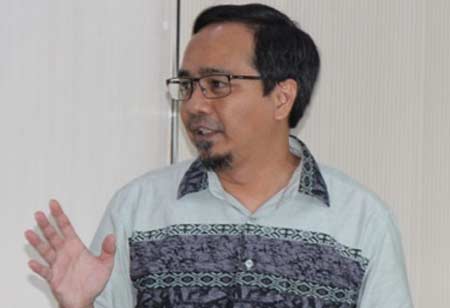
Organizations that are successful and adaptive must have at least five things that should be managed well; strategy, structure, systems, culture and people (figure 1). These five factors must exist and support each other. An organization that has a visionary strategy will be useless if it is not supported by a strong culture and the people within it. Meanwhile, in my working experiences, many organizations forget to look at these factors while building or trying to become a successful organization, they only have or are good at 1-3 factors, no wonder they are struggling to compete and stuck at the current levels.
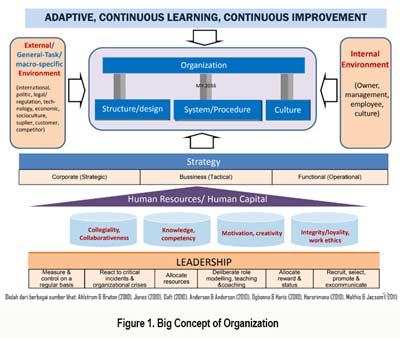 In another aspect, currently, there has been a significant shift in the market value of organizations from previously being measured from tangible assets to intangible assets, as the world has advanced into the information economy (Figure 2) based on the Brookings Institute's research and Baruch Lev's analysis of the Standard & Poor's 500 companies (Lev, 2001) stated that the market value of companies resided in intangible assets (brands, reputation, information, human capital, strategy, culture, etc).
Chatzkel (2003) states that organizations that focus on increasing HR capital will double their ROI. Human is the organization's best source for developing competitive advantages. Intellectual capital, which is a characteristic of human capital, is believed to be able to compete with physical and financial capital investments, and even outperform physical and financial capital. Previous research results in England, India and Japan show the effectiveness of intellectual capital in producing higher value-added than physical and financial capital.
Therefore, becoming a differentiator means that companies must build a competitive workforce by finding the skills needed, investing in continuous learning and skills development, and managing and optimizing performance.
 1. Finding Required Skills for the Future Organization
Organizations must carry out an in-depth analysis of long-term strategies combined with trends that will occur in business in the future, such as technology, young workers, deregulation, global markets, competitors and so on. At the same time, determine what the organization is good at (culture, process, quality, etc.) then identify what skills are needed and what are the important roles that make the organization different. Then map the organization's human resources to compare them with the organization's future needs. By projecting the skills and abilities needed in the future, companies can plan and prepare their workforce better to fill the gaps and roles needed by the company to make maximum use of existing opportunities. For example, when an organization wants a transformation in the field of AI skills, the company must evaluate these skills in the company and then plan internally and externally for a workforce that is competent in the AI field. The weakness of most organizations is that they only recruit employees for current positions without considering whether the candidate is a good fit for the future.
"Managing talent—meaning, the workforce—has always been an important function of HR."
2. Continuous Development and Learning Investment
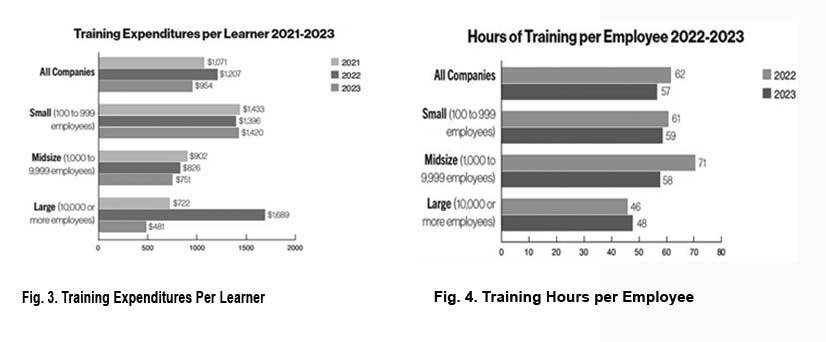
Training enables workers to reach their full potential, expand their skills and capabilities to meet needs current as well as future skills, and prepare them for career opportunities (critical roles). The succession planning program must be directed by not only ensuring they have above-average performance but also include elements of skills that are crucial for the future needs of the organization. Providing a place for a career keeps your employees motivated and growing. A process that is also important is onboarding, pay close attention to this program, is it effective and helps new hires? If necessary, organize a buddy program, appointing one senior employee who has critical skills and performance to be a role model in onboarding new employees. Since training is an investment, the question becomes ‘how to prepare training budgets without breaking the bank?’, typically 2 – 2.5 percent of the company's budget allocated to employee training is considered standard, whereas for medium to large companies invest 2-5 percent of salary budgets back into training. See Figures 3 and 4 for training expenditures and hours per learner in theU.S. (trainingmag.com).
3. Optimizing Performance
Review the existing performance management system. Most organizations are unwilling to put in the extra effort to build these systems. What exists generally only focuses on measuring the performance of each employee's current responsibilities and measuring the same performance from year to year. Companies must shift to a future-focused approach—designed to empower employees and achieve the organization's long-term strategy. Improve the quality of KPI by using SMART-C, where C (challenging) means higher and bigger targets every year. The performance process emphasizes dialogue and ongoing development. Continuous and regular feedback is key in PMS that can encourage engagement and improve workforce development.
Managing talent—meaning, the workforce—has always been an important function of HR. Although there have been significant changes such as hybrid, AI technology and a young workforce have certainly changed how organizations operate, how work is done and ultimately how to engage employees. Being a competitive differentiator means how you can find the skills needed for your company along your strategy, investing in continuous learning and skills development, and managing and optimizing performance.
